In the Land of Fairy Shrimp
Something magical happens in the liminal period between winter and spring. As temperatures warm and snow starts melting, ephemeral wetlands begin to form.
Also called vernal pools for their appearance in spring, these ecosystems are some of the most diverse and fascinating features of the northeastern American forest, especially here in Michigan. Like their name suggests, this type of wetland is transient, only existing for a relatively brief period between fall and spring before drying in summer. Despite their short-lived nature, ephemeral wetlands provide vital habitat for rare, threatened, and endangered plants and animals.
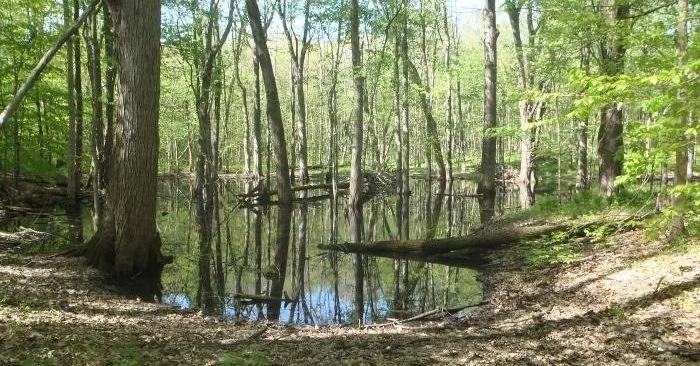
A forested ephemeral wetland. Photo courtesy Michigan Vernal Pool Patrol.
Turtles, frogs, salamanders, snails, dragonflies, and even a tiny freshwater crustacean called the fairy shrimp rely on vernal pools as breeding grounds, food sources, or shelter. Because these pools typically form in Michigan’s upland forests from snowmelt, rain, or groundwater and also experience periods of dryness, they cannot support fish populations—a common predator for many of these species. That is part of what makes ephemeral wetlands such critical habitat. While vernal pools may appear to be large, stagnant puddles, beneath the surface of the water, they’re teeming with life!
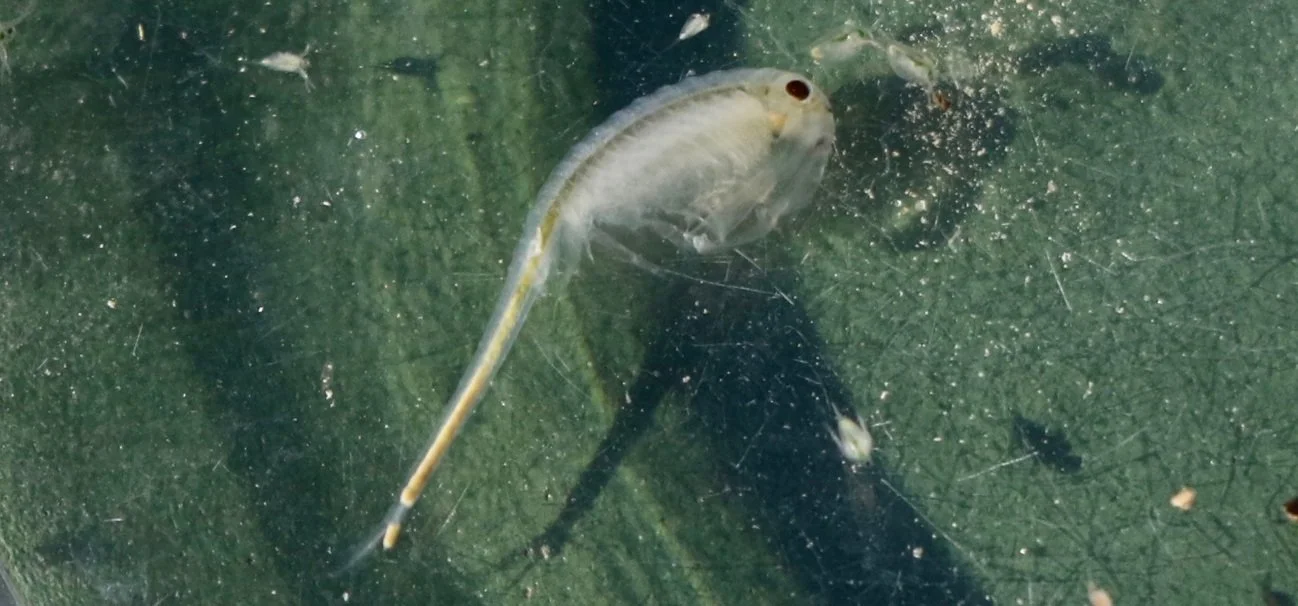
A fairy shrimp!! Magical!! Photo courtesy National Fish and Wildlife Service.
Over 550 species have been observed living in or migrating to vernal pools, including invertebrates, amphibians, reptiles, mammals, and birds. Because vernal pools support so many species, they’re sometimes called the “coral reefs of the northeastern forest.” Some species like wood frogs, spotted salamanders, and fairy shrimp have evolved alongside vernal pools over millennia, and depend on them for all or part of their lifecycle. Some freshwater crustaceans and aquatic insects have evolved to lay eggs that can tolerate periods of dryness or freezing, and some lay large quantities of eggs that can hatch across periods of time. Many species migrate to vernal pools in the spring to breed or hunt. Birds like ducks, geese, swans, and great blue herons, as well as mammals like racoons, bats, black bears, and white tailed deer use vernal pools as a source of food and water.
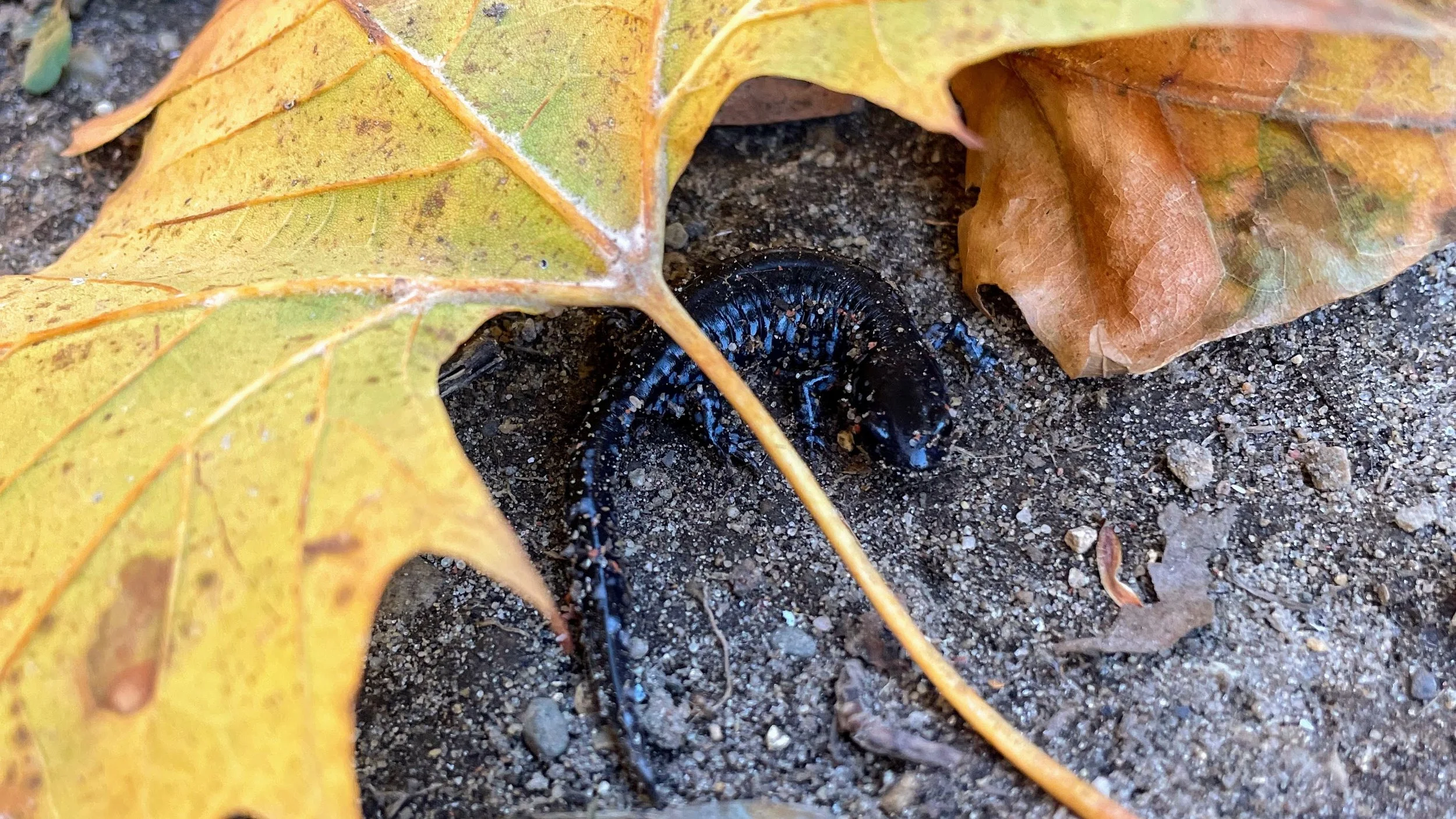
A spotted salamander. Photo courtesy Jessi Roy.
Vernal pools are typically small and shallow, and may experience flooding and drying several times in a season. Some vernal pools will remain flooded for months, and others for years. In wetter years, pools may remain flooded for longer, and dry earlier in years of drought. Because they are semi-consistent sources of water, vernal pools also support a swath of water-loving plants. Trees like red and silver maple, yellow birch, black ash, and white pine, as well as herbaceous species like jewelweed, harlequin blueflag iris, and sensitive fern, are just some of the species that can be found growing near or in ephemeral wetlands. Rare species like Shumard’s oak, raven’s-foot sedge, squarrose sedge, and false hop sedge can be found in Michigan. The makeup of plants around or in a vernal pool can massively impact the species that rely on it as well as the temperature of the water, the amount of water, and how long the pool stays flooded.
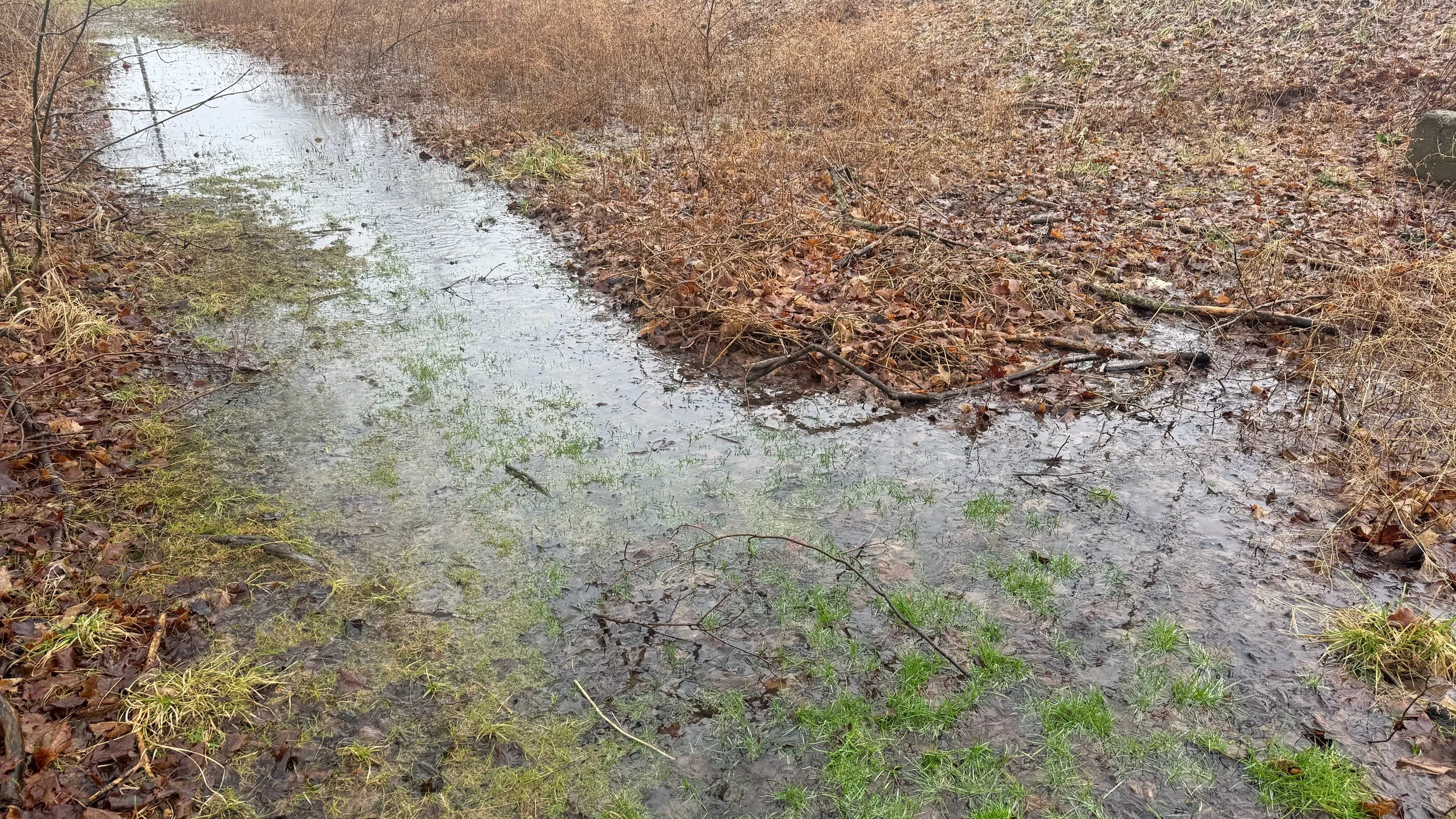
A small vernal pool near a roadside.
Vernal pools support a multitude of animal and plant species, making them some of the most ecologically valuable landscape features. They provide nutrients, water, and shelter to common and endangered species alike, especially at critical times in spring and fall. Due to their isolated nature, ephemeral wetlands lack governmental protection, and are especially sensitive to human activity. Many of these habitats have been destroyed or degraded since European colonization, and the species that rely on them are forced to either relocate to an ever-shrinking number of other ephemeral wetlands or perish. Pollution like road runoff and agricultural pesticides can also destroy and destabilize entire populations of plants and animals alike in these pools.
Just as human activity can destroy this special kind of habitat, humans can help heal it, too. Pick up trash when possible. Advocate for regulations on pesticides. Educate others on the importance of these vital wetlands. Find out if anyone in your area is working to conserve them. If you’re in Michigan, join the Michigan Vernal Pool Patrol to learn more and contribute to community science initiatives that help preserve our incredible ephemeral wetlands!
The magic of nature is all around us—all we need to do is slow down and look beneath the surface.